
WHO WE ARE

CATARINA MAGALHÃES
GROUP LEADER
I am dedicated to understanding how microscopic life shapes natural environments and responds to ecosystem functioning, from the icy waters of the Arctic and Antarctica to the deep sea and coastal ecosystems. I work as a researcher at CIIMAR and teach at the University of Porto. I also serve on the coordination committee of the Portuguese Polar Program. In my research, I combine oceanographic expeditions, laboratory experiments, and advanced genomic approaches, such as metagenomics and metatranscriptomics, to investigate how these invisible communities respond to environmental change. I am actively involved in several national and international marine microbiome monitoring programs, contributing to global efforts to standardize microbiome research and data sharing. I particularly value collaborative work and the opportunity to bring together multidisciplinary teams to address key challenges in marine science.
Miguel Semedo received his PhD in Marine Sciences from the Virginia Institute of Marine Science, College of William and Mary (2019), and he is currently a junior researcher at CIIMAR. As a microbial ecologist, Miguel is interested in investigating the diversity and function of microbial communities across multiple environments and their roles in biogeochemical processes. He is especially interested in understanding the impacts of human activities and pollution on these microbial processes. Currently, he is investigating the impacts of metal exposure on deep-sea microbial communities. Besides this main project, he collaborates in several national and international projects in the fields of microbial ecology, nitrogen cycle, and environmental pollution. For his research, he applies molecular, bioinformatic, and biogeochemical methodologies to connect the dots between microbial community composition and biological activity.

MIGUEL SEMEDO
CO-GROUP LEADER

JOANA COSTA
POST-DOC RESEARCHER
Joana Faria da Costa graduated in Aquatic Sciences in 2006 and obtained her PhD degree in Biomedical Sciences in 2012 by the Institute of Biomedical Sciences of Abel Salazar, University of Porto. She is currently a post-doc researcher at the laboratory of Microbiome Ecology and Biogeochemistry in CIIMAR, with expertise in molecular biology, next-generation sequencing and environmental toxicology. Her current main research interest focuses on the study of microbial communities involved in the mercury cycling, nitrogen cycling and pollutant detoxification, from polar environments.
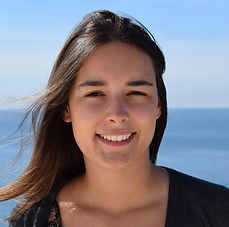
Adriana Rego is a researcher working in the interface of environmental microbiology, marine biotechnology, microbial and chemical ecology fields. She completed her PhD in July 2023, in a collaborative project with CIIMAR (supervised by Dr. Catarina Magalhães and Dr. Pedro Leão) and Max Planck institute for Marine Microbiology (supervised by Dr. Antonio Fernandez-Guerra). Across the 4- year PhD program, Adriana assessed the biosynthetic potential of Earth microbiomes, through analysis of conserved domains of biosynthetic genes, and retrieval of complete metagenome-assembled genomes from metagenomic datasets. Currently, she is a junior researcher of the Blue Bioeconomy Pact project at CIIMAR, where she focuses on understanding how beneficial interactions occurring with(in) the algae microbiome can improve their biomass production. In addition, Adriana is the PI of an exploratory project targeting the chemical ecology of cyanobacterial environmental biofilms.
ADRIANA REGO
POST-DOC RESEARCHER

FRANCISCO PASCOAL
POST-DOC RESEARCHER
Francisco Pascoal holds a PhD in Biology, from University of Porto, and is currently a researcher at CIIMAR. His research focuses on the development of data science tools, including machine learning, to analyse microbiome datasets. He is an expert on the prokaryotic ecology of the Arctic Ocean and on the microbial rare biosphere topic. Recently, Francisco developed an unsupervised learning strategy to define the microbial rare biosphere, and is currently working on rule-based and supervised machine learning to uncover the complexity of microbiome datasets.
.jpeg)
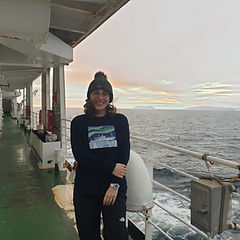
PhD in Biology specialising in the use of molecular tools for the study of evolutionary biology and conservation. My research focuses on biodiversity monitoring using environmental DNA and various next-generation sequencing techniques. I am currently working at the National Museum of Natural Sciences (CSIC, Madrid) on a project studying different marine and freshwater sponge species as environmental DNA samplers in different ecosystems.

ANDREA CORRAL LOU
POST-DOC RESEARCHER
.jpeg)
EVA LOPES
PHD STUDENT
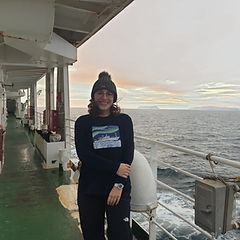
Eva Lopes holds a Master’s degree in Marine Sciences – Marine Resources, with a specialization in Marine Biology and Ecology from the University of Porto. She is currently pursuing a PhD in the doctoral program “Marine Science, Technology and Management” at the Faculty of Sciences of the University of Porto. Her research focuses on understanding how the Atlantification phenomenon — the warming of Arctic Ocean waters due to the influx of warmer Atlantic waters — impacts microbial communities, with a particular emphasis on their diversity, inter-species interactions, and the nitrogen cycle. To support her research, Eva collaborates with the Norwegian Polar Institute and conducts fieldwork at the Ny-Ålesund science station. In addition, she participated in Arctic Pacific Ocean research expeditions aboard the RV Mirai (JAMSTEC) in 2023 and 2024.
Leonor Pizarro holds a Bachelor’s degree in Microbiology and a Master’s in Applied Microbiology, both from the Escola Superior de Biotecnologia – Universidade Católica Portuguesa do Porto. After working as a research techician at CIIMAR for the DeepResist project, she is now a PhD student at CIIMAR, in colaboration with WHOI (USA), where she explores metal impacts and the bioremediation potential of deep-sea bacteria and microbial communities. Leonor participates regularly in deep-sea cruise expeditions where she collects samples for her PhD work, and learns about various equipments and techniques.
Leonor is also a part of CIIMAR’s PhD students committee, having participated in the organization of 2024’s Blue Think Conference, among other activities.

LEONOR PIZARRO
PHD STUDENT

MARIA BOTO
PHD STUDENT
Maria Luis Bôto received her bachelor’s degree in Biology in 2016 from University of Aveiro and holds a master’s degree in Biodiversity, Genetics and Evolution from the Faculty of Sciences of the University of Porto (FCUP). Her PhD project is integrated in the Doctoral Program of Aquatic Sciences – Biology and Ecology (ICBAS-UP) and focuses on exploring the genetic potential of native microbial consortia to degrade petroleum compounds.
Nicola Gambardella is a PhD candidate conducting his research within the Microbial Ecology and Biogeochemistry (MEB) group at the Interdisciplinary Centre for Marine and Environmental Research (CIIMAR). His project, supported by the 'la Caixa' INPhINIT Fellowship Programme, aims to investigate and characterize the metabolic potential of prokaryotic communities involved in mercury (Hg) transformation in thawing Arctic permafrost, using an integrated multi-omics approach.

NICOLA GAMBARDELLA
PHD STUDENT

LUÍS AFONSO
PHD STUDENT
Luís Afonso is a PhD Student at the Coastal Biodiversity Laboratory and the Microbiome Ecology and Biogeochemistry team at CIIMAR, graduated in Aquatic Sciences from the University of Porto and with a master’s degree in Applied Marine Biology from the University of Aveiro. Since 2019, his research has been carried out in cetacean ecology, now mainly focusing on the development and application of molecular tools such as environmental DNA to study marine vertebrates, with a particular focus on marine mammals and its prey.
Sharath Chandra Thota is a second-year PhD student at CIIMAR, Portugal. He holds a Master’s degree in Biology of Extreme Environments from Italy and a Master’s in Biotechnology from India. With a deep interest in the life that thrives under extreme conditions, his research focuses on the impact of atmospheric rivers on extreme weather events and microbial biodiversity in the Antarctic Peninsula. His work is conducted under the supervision of Irina Gorodetskaya and Catarina Magalhães (CIIMAR, Portugal) and Markus Frey (British Antarctic Survey, UK), and is supported by an AIR Center grant. Sharath has hands-on experience working with a wide range of microorganisms, including fungi, bacteria, viruses, haptophytes, and diatoms. During the COVID-19 pandemic, he contributed to the evaluation of airborne SARS-CoV-2. His earlier research spans topics such as transgenerational epigenetic inheritance and microbial diversity in Svalbard permafrost.

SHARATH THOTA
PHD STUDENT

JENNIFER BENAVIDES
PHD STUDENT
Jennifer obtained a bachelor's degree in biology from Universidad del Valle (Colombia) and a master's degree in molecular biology through a joint programme with Vrije Universiteit Brussel, KU Leuven, and the University of Antwerp (Belgium). Throughout her education and professional experience, she has gained expertise in microbiology, bioinformatics, and agro- and plant biotechnology. She is currently a PhD student in the doctoral programme in Biodiversity, Genetics, and Evolution at the University of Porto. Her research, funded by the AIR Centre and the FCT, focuses on evaluating the impact of climate change on nitrogen-cycling microbial communities in the Arctic Ocean.
Afonso Mota is a Portuguese astrobiologist and PhD candidate at the University of Porto, working in CIIMAR as well as the Portuguese Institute of Astrophysics and Space Sciences. His research bridges microbiology and astrophysics to assess microbial habitability in the Solar System (e.g. Mars and icy moons) and beyond (exoplanets). In particular, his work focuses on modelling (exo)planetary environments and then performing laboratory experiments to assess the survival and growth capabilities of extremophiles in such conditions. He has presented his research in several national and international conferences, as well as actively participating in science communication with the general public.

AFONSO MOTA
PHD STUDENT
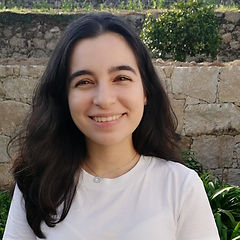
Maria Francisca Espincho has a bachelor's degree in Biochemistry and a Master's in Environmental Toxicology and Contamination, both from the Faculty of Sciences of the University of Porto (FCUP) and from the School of Medicine and Biomedical Sciences of the University of Porto (ICBAS-UP). Currently, Francisca is a PhD student in the doctoral programme of Environmental Toxicology and Contamination (ICBAS-UP). Her work focuses on the study of biodegradable fishing gear as a sustainable alternative to conventional plastic-based fishing gear, studying its environmental harmfulness through the potential release of microplastics, adsorption of chemical contaminants and biocolonization.
MARIA FRANCISCA ESPINHO
PHD STUDENT
She is a PhD candidate at the University of Porto, conducting research at CIIMAR and IRNAS on the geomicrobiology of extreme environments. Fascinated by astrobiology, her work focuses on the microbial processes that shape habitability in extreme systems on Earth. She holds a Master’s degree in Biology of Extreme Environments from the University of Naples Federico II, where she studied the microbial ecology of hot springs in collaboration with the DEEM team at the University of Paris-Saclay. Her current research investigates the nitrogen cycle in deep-sea environments and lava caves, aiming to better understand microbial life in conditions analogous to those found on other planetary bodies.

MARINA GRILO
PHD STUDENT

KSENIJA VUCKOVIC
RESEARCH FELLOW
Ksenija obtained a Masters Diploma in Biodiversity, Genetics, and Evolution from the University of Porto, in 2024. Her Master’s thesis at CIIMAR focused on microorganisms involved in ice nucleation and cloud condensation in Antarctic precipitation. Currently, she is a fellow under the AntClimNow Stewardship Scheme from SCAR, working on improving access to climate-related data for Antarctica. As part of the APMAR25 and MicroANT projects, she studies the role of Atmospheric Rivers in the transport of microorganisms in the Antarctic Peninsula.
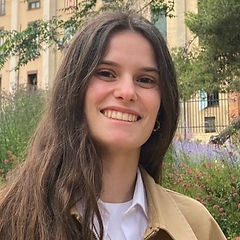
Diana Sousa holds a bachelor's degree in Biology from the University of Aveiro and is pursuing a master's degree in Microbiology at the same institution. She is currently developing her thesis at CIIMAR, where she investigates the diversity and functional roles of microbial communities in the Arctic Ocean ice platform.
DIANA SOUSA
MSC STUDENT

ISABEL SOUSA
MSC STUDENT
Isabel holds a BSc degree in Bioengineering from the Faculty of Engineering of the University of Porto (FEUP), and is currently a Master’s student in Bioengineering, with a specialization in Molecular Bioengineering, at the same institution. Her research focus is the development of sustainable life support systems for space exploration, through the use of microorganisms. Isabel was awarded the Blue Young Talent Scholarship (2022) and the Gulbenkian Novos Talentos Scholarship (2023).
Ana Rita Domingos é licenciada em Biologia pela Faculdade de Ciências da Universidade do Porto e atualmente frequenta o Mestrado em Microbiologia na Universidade de Aveiro. No âmbito da sua tese de mestrado, está a estudar as comunidades microbianas do Oceano Ártico, com especial interesse em perceber de que forma as alterações climáticas, nomeadamente o aumento da influência das águas do Pacífico no Ártico, estão a impactar estas comunidades. Para além da ecologia microbiana, tem interesse em metagenómica e em abordagens bioinformáticas para a análise de dados de DNA ambiental.

ANA RITA DOMINGOS
MSC STUDENT

LEONOR CASTRO
MSC STUDENT
Master’s student in Bioinformatics, with a Bachelor’s degree in Aquatic Sciences from ICBAS. Currently working at CIIMAR as a BII fellow within the CHANGE project in the MBE group, with an interest in applying data-driven approaches to understand aquatic ecosystems, biodiversity, and environmental change.
Letícia Paiva is in the final year of her Bachelor’s degree in Biology at the Faculty of Sciences of the Universidade do Porto. She is currently developing her curricular internship project at CIIMAR, where she works with environmental DNA (eDNA) samples to identify potential pathogens present in Arctic thermokarst lakes. Her research focuses on assessing the potential risks these microorganisms may pose to global health, contributing to a better understanding of the impacts of environmental change in Arctic ecosystems.

LETÍCIA PAIVA
BSC STUDENT

MAFALDA BAPTISTA
COLLABORATOR RESEARCHER
Mafalda Baptista is a postdoctoral researcher working on the microbial ecology of aquatic systems and extreme environments. She got her PhD in Environmental Sciences and Technology from the University of Porto in 2008. Since then she has established a number of collaborations with research institutions, namely the Center for Environmental Implications of Nanotechnologies, University of California at Santa Barbara, in the USA, the Department of Ecology, Environment and Plant Sciences, University of Stockholm, in Sweden, and the International Centre for Terrestrial Antarctic Research, University of Waikato, New Zealand
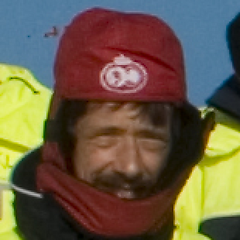
Pedro Duarte conducted his PhD research at the New University of Lisbon and worked as Assistant and Associate Professor at University Fernando Pessoa, Portugal, between 2005 and 2013. He got is “Agregação” in 2012. Since 2013, he has worked as a Senior Research Scientist at the Norwegian Polar Institute. His current research is focused on Arctic Ocean ecosystem change resulting from global warming, with an emphasis on primary production changes and implementation and usage of coupled ocean and sea-ice physical-biogeochemical models. Since 2018, he has been responsible for the Modelling work package of the Kongsfjorden Ecosystem Flagship Research Program on Svalbard. His curriculum vitae contains ~100 peer-reviewed publications
PEDRO DUARTE
COLLABORATOR RESEARCHER

NAOMI MASSACCESI
VISITING PHD STUDENT
Naomi Massaccesi is a PhD student in the FishMed international programme (CNR-IRBIM & University of Bologna). Her research examines how antibiotic resistance emerges and spreads in aquaculture, using shotgun metagenomics, 16S rRNA metabarcoding and qPCR analysis. She works across the production chain—from sources such as effluents and river inputs, to open-sea farms and RAS, and finally farmed fish. By characterising the resistome and pathogenic bacteria, Naomi provides evidence to guide management actions that enhance aquaculture sustainability and food safety.